The Linksight platform
Analyze together with other organizations, while everyone's data stays where it is. For insights that used to be impossible or unaffordable.
Two roles, three components
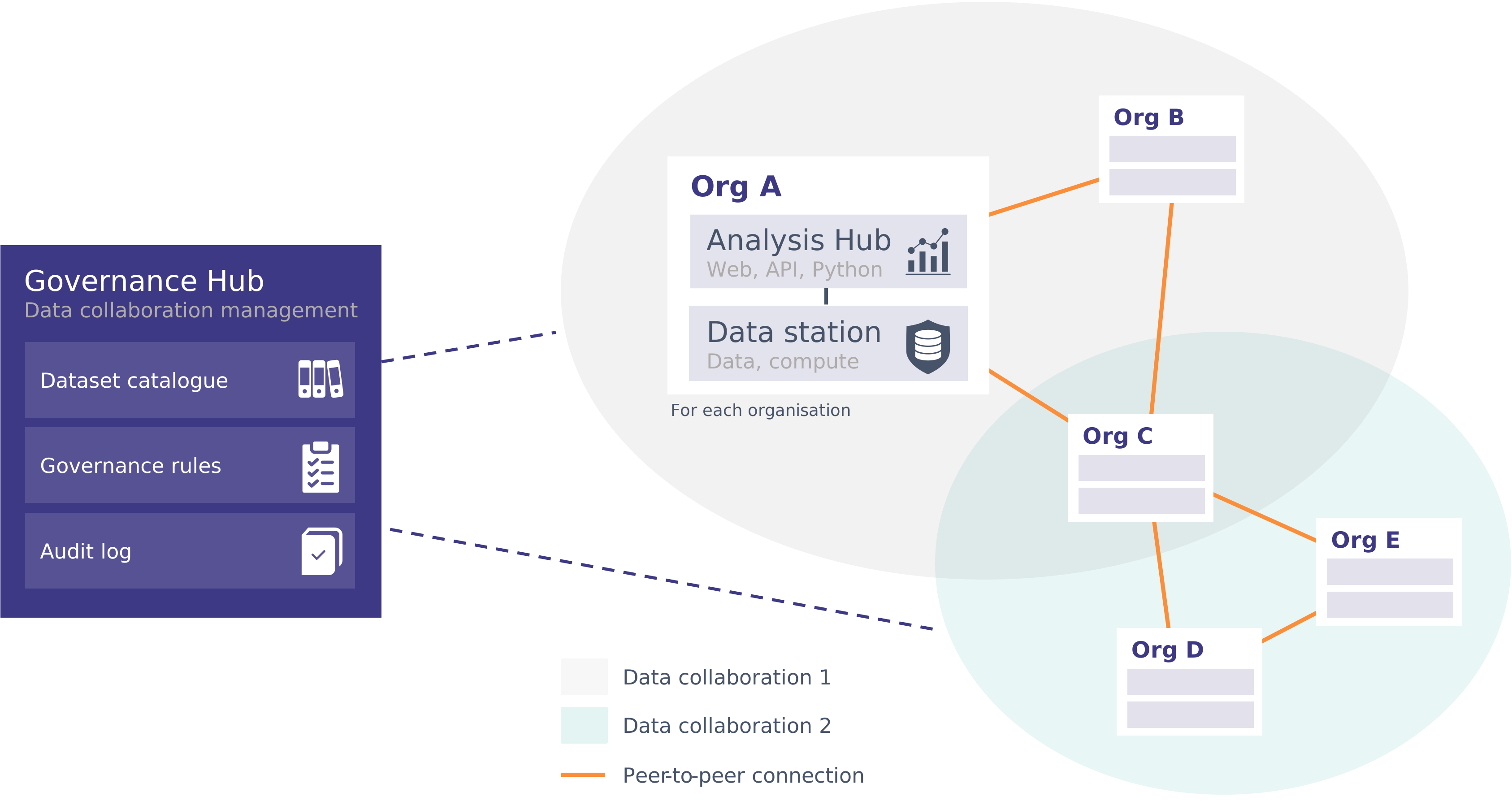
A data collaboration on Linksight has two roles. The data steward decides on behalf of the organization which data is available and under which rules. The data scientist asks the questions and runs the analyses. Each works in their own part of the platform.
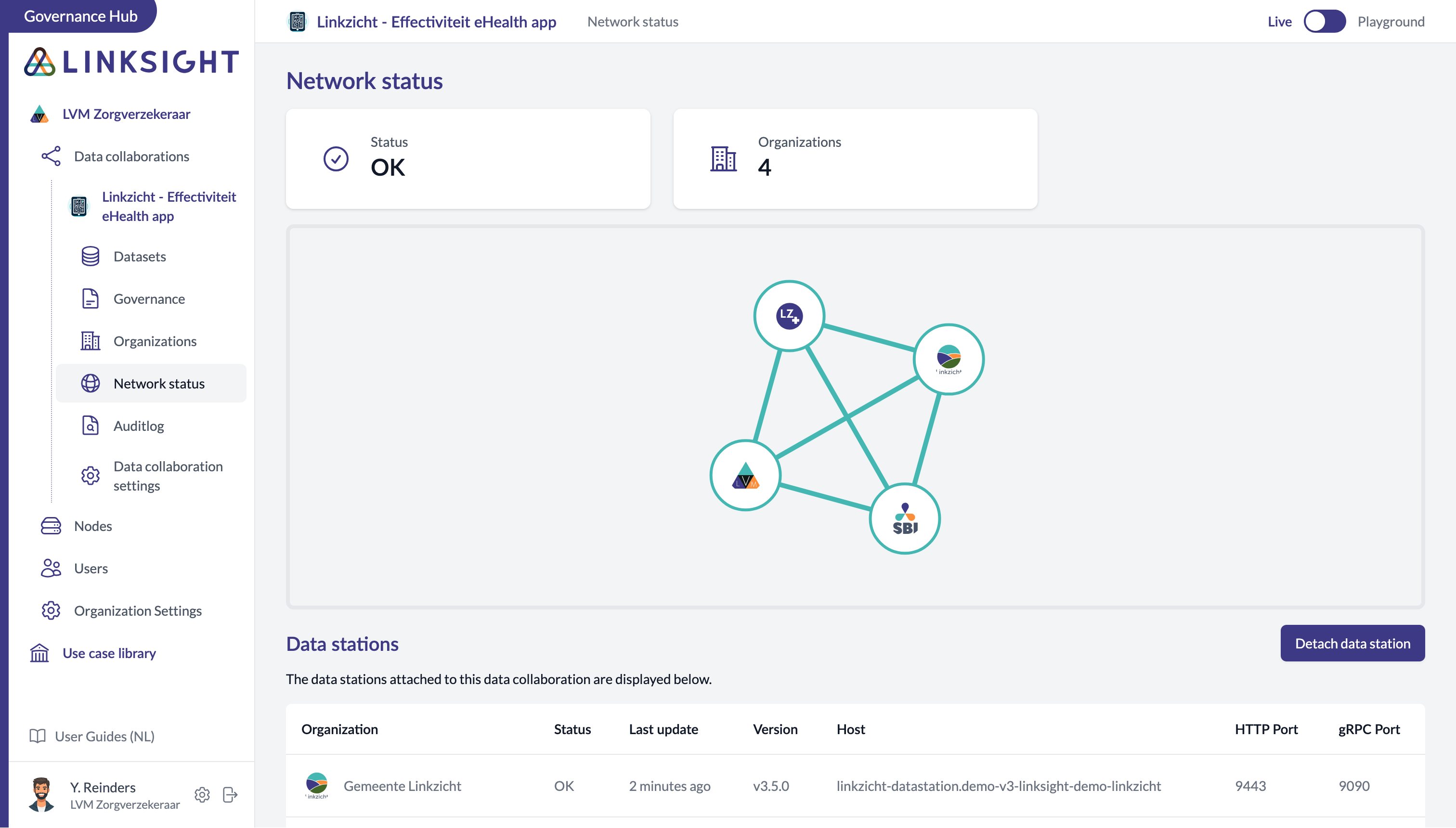
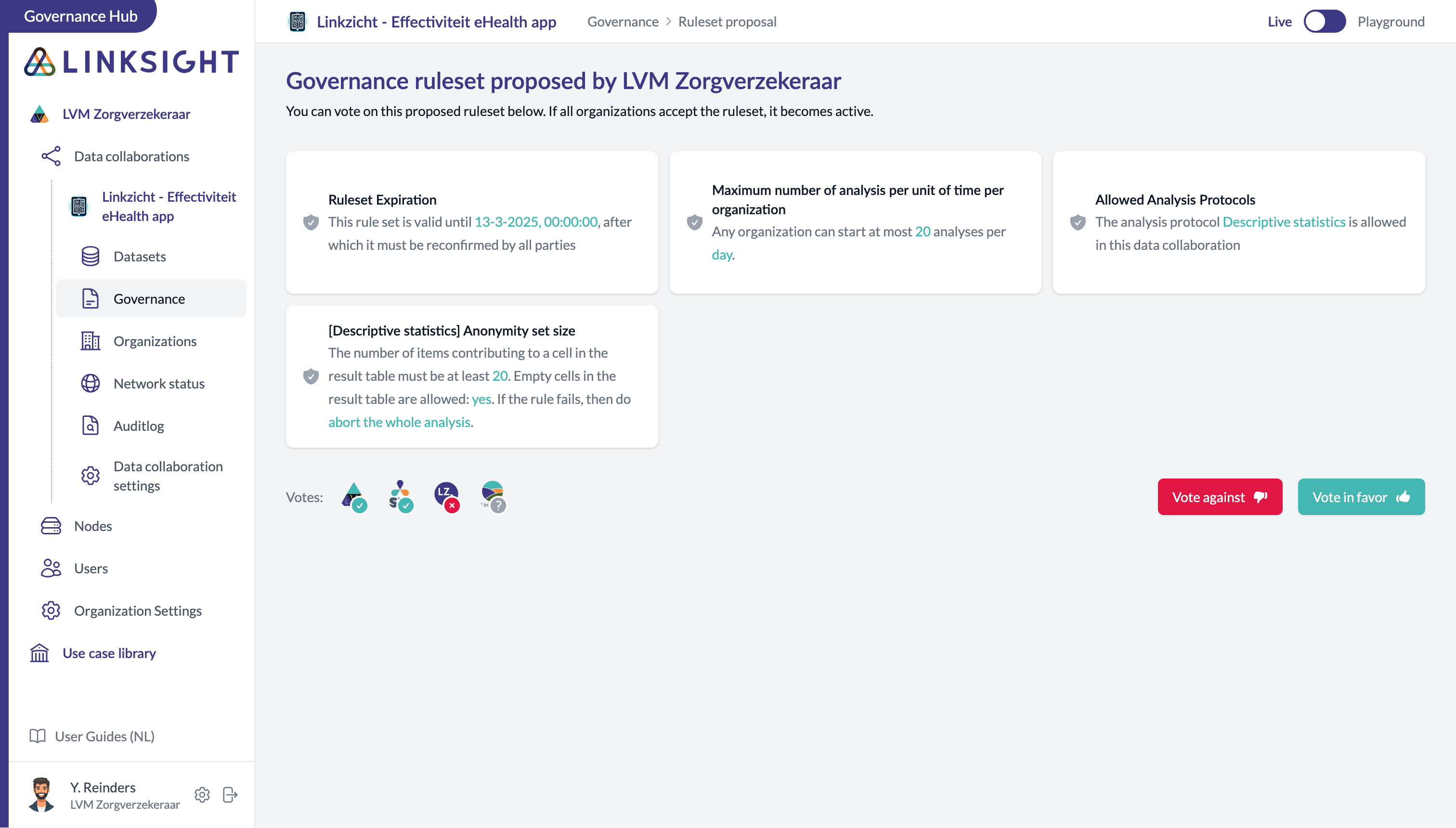
The data steward works in the Governance Hub. This is where you set up and manage data collaborations: which organizations take part, which datasets are available and which rules apply. Every action is recorded in the audit log.
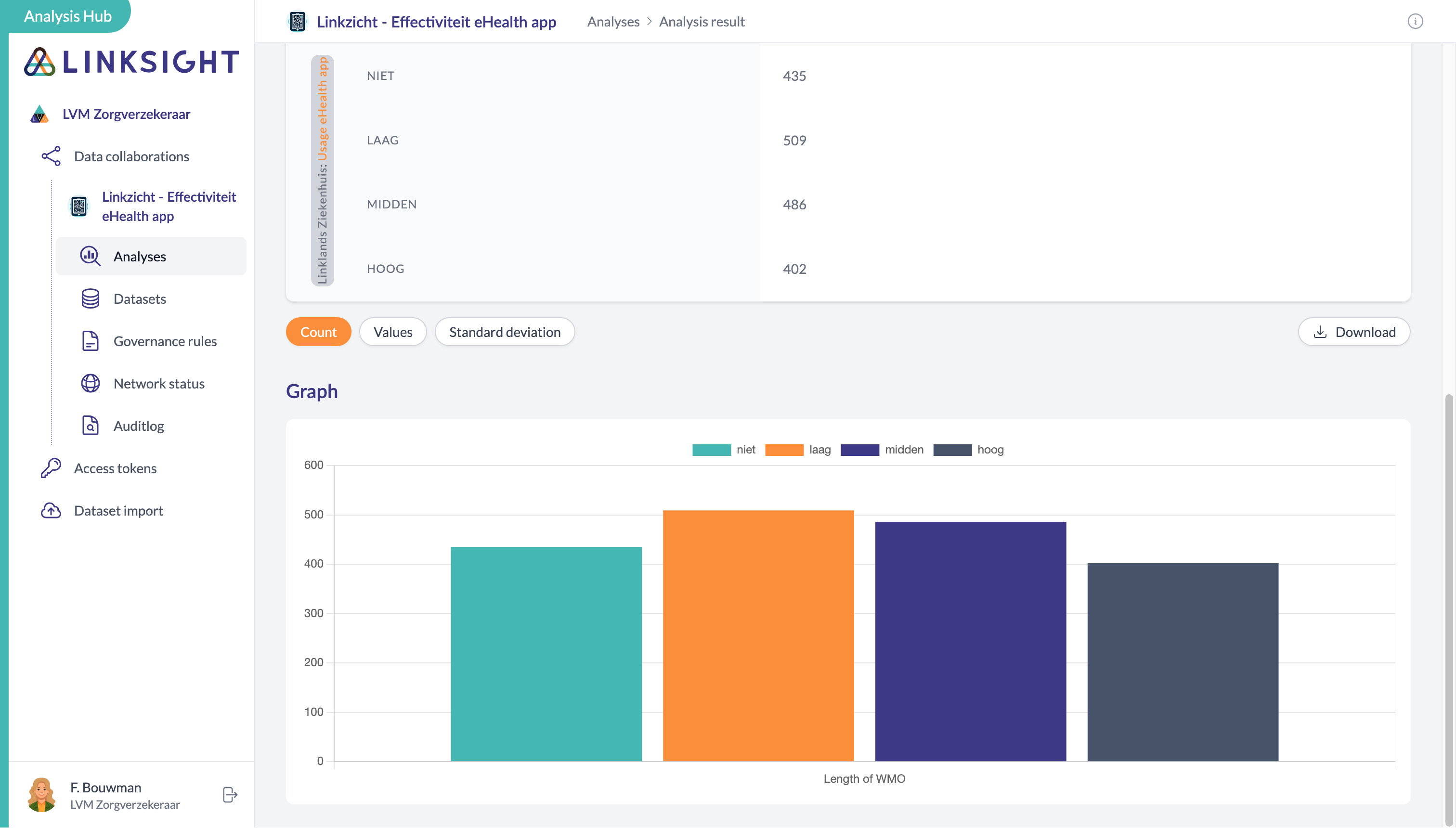
The data scientist works in the Analysis Hub. This is where you run analyses on the combined data, through the web interface, the API or Python. You see the results, never the underlying data.
The data itself sits in the data station that each organization runs on its own premises. There the data is encrypted, and it never leaves the data station in readable form. Data stations connect directly to each other and carry out the computations jointly.
The platform in pictures
Start unlimited data collaborations with anyone on the Linksight network.
Gain multi-organizational insights that were previously unattainable.
Data does not leave your premises, combined with unique data collaboration governance.
Collaboration rules
Every data collaboration has its own rules, set by the participants themselves and enforced by the platform. For example which analyses are allowed on which datasets, who may start them, whether an analysis first needs approval from the other participants, and which minimum group size applies to results. An analysis outside the rules does not run. Everything that does run is in the audit log, so you can show afterwards what was done with the data.
Read more in our whitepaper on the governance of data collaborations.
The technology
The platform has a broad range of privacy-enhancing technologies at its disposal and applies, per situation, what is needed to compute insights without compromising privacy or confidentiality. Computing on encrypted data is done with secure multiparty computation based on secret sharing or with homomorphic encryption. For matching records across organizations we use private set intersection (PSI) and its variants. For training AI models we use federated learning: the model travels to the data stations, the data does not. Automated statistical disclosure control prevents results from being traceable to individuals. One thing holds for all of these techniques: no party ever sees another party’s data.
The network
Organizations that use Linksight together form a network. A new collaboration starts with organizations that are already connected, without new infrastructure. Every organization that joins can immediately take part in several collaborations. Analyses can be repeated and automated, so insights stay current without new agreements.
How to start
-
1The questionWhich question do you want to answer, and which organizations hold the data for it? We help shape the approach.
-
2Partners on boardEach participating organization signs an agreement and gets access to the Governance Hub.
-
3Data stationsEach organization installs a data station, or has it hosted by one of our partners, and connects its own data. See the installation documentation.
-
4Set up the collaborationThe participants jointly set up the data collaboration: which datasets take part and which collaboration rules apply. We guide the governance and supply the input for the DPIA.
-
5First analysisThe data scientists run the first analyses within the agreed rules.
-
6ExpandInvite new partners and ask new questions within the same collaboration. Analyses can be repeated and automated.
Want to know how Linksight can support your case?